The Geese Return !

 September '22

I was able to get out on the first day of the month and already it seemed as though birds were on the move, the weather was obviously favourable. There were one or two Pied Flycatchers still present, but still preferring the tree canopies to feed in and staying hidden for most of the time.
I was most pleased to see 2 or 3 Garden Warblers on the same day too, a pretty plain looking bird and one that can be quite elusive and hard to see, so imagine my delight to photograph them eating elderberries!


Garden Warbler
Notice the large eye and the greyish collar, an elegant bird though. There were a few Chiffchaffs moving along the hedgerows busily feeding. Buzzards and Red Kites were seen heading along the coast, Med Gulls were still showing in large numbers overhead and on the sea. And a Peregrine flew past the garden, it's been a while since I had seen one go over.
On the 3rd Sept, I watched 8 Bee-eaters head over Church Road heading west, despite them leaving the quarry they were still moving around not quite ready for the journey south, but some time later I heard of a report of the group over Minsmere, Suffolk so they were heading in the right direction!
Male Blackcap
A couple of male Blackcaps fed on elderberries and blackberries after I watched the Bee-eaters pass over, a single Pied Fly was still hanging around too.
Pied Fly
On the 5th the warblers kept moving through, I had a couple of Lesser Whitethroat, a Hobby passed over the garden heading south, along with 15 or so Buzzards heading in the same direction. On the 6th Golden Plover and Whimbrel were seen over the garden heading along the coast. On the 14th, after seeing a Grey Wagtail pass over the garden I decided to do the rounds. A group of mixed birds moving through the trees included Goldcrest, Blackcap, Chaffinch, Chiffchaff, Willow Warbler, Long tailed tit and Coal Tit.
Goldcrest
Long tailed tit
Chiffchaff
It can be tricky watching little warblers flitting among the leafy canopies, that was no exception on the 14th, there were a lot of Chiff/Willow warblers along the lanes. The chiffchaff if calling could be labelled, the Willow warblers were a lot brighter yellow in the plumage and normally paler legs than the chiffchaff darker leg colour, but some willows may show darker legs and paler feet! The bill on the chiffchaff (top image) is darker than the paler orangey bill on the willow (images below) and the supercilium (stripe over eye) is yellower and longer on the willows. 
Willow Warbler


And to add to the tally of birds a Common Redstart fed along the lane edges, when it wasn't being chased off by a Robin that is.

Common Redstart

On the 19th a familiar sound was heard and a sign of autumn's arrival.
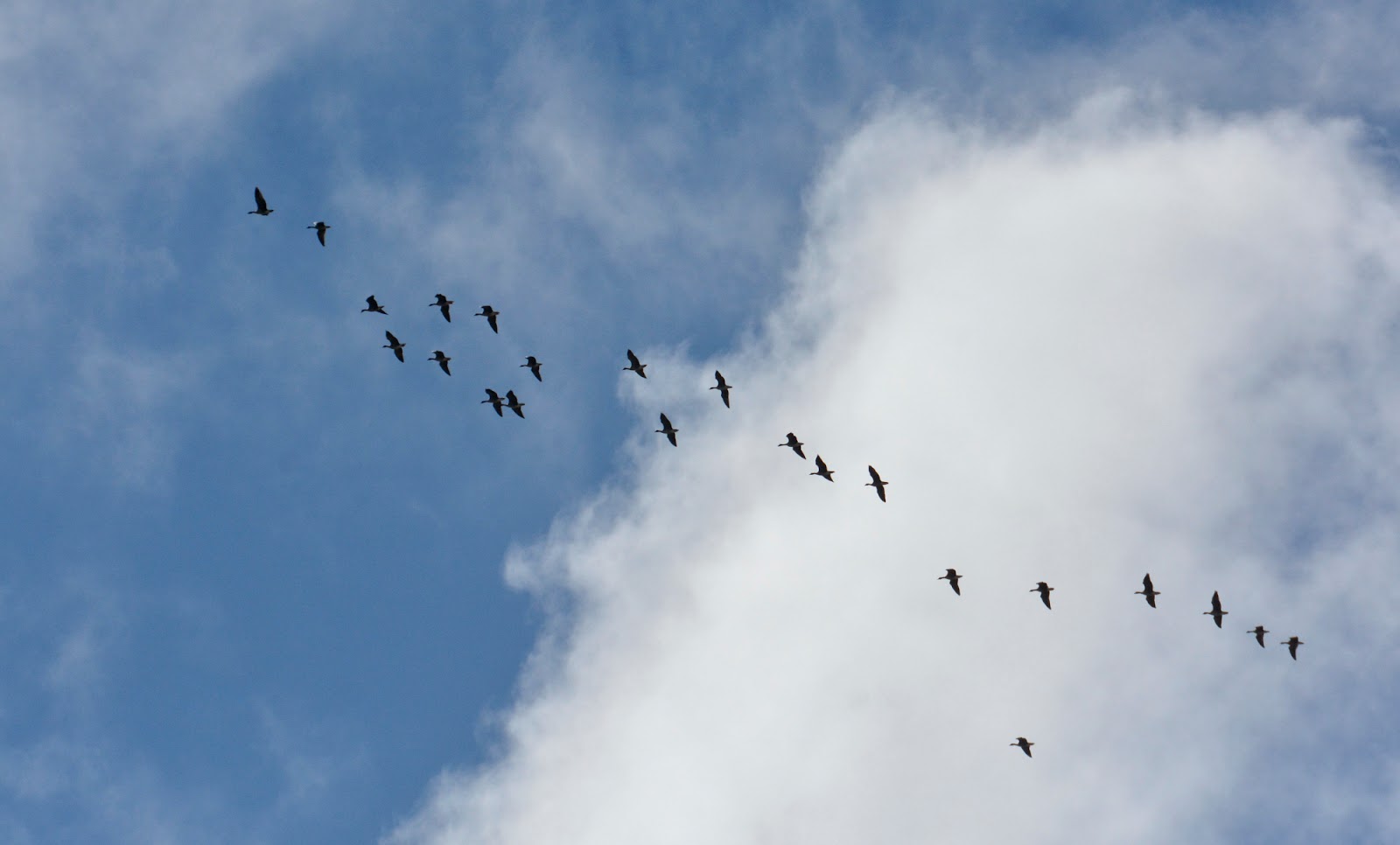
The Pink Footed Geese had returned!
By the end of the month we were seeing hundreds pass over every day, how nice to hear them moving over us again.
On the 20th I was able to get my 190th bird species for Trimingham !
News of a Red Flanked Bluetail at the Kearns site was just too awesome a bird to not see anywhere. I had what was a brief probable sighting, but just a silhouette before having to leave the site. I then went back in the afternoon to try and see this bird, it had been seen alighting the fence on a couple of occasions but never when I was able to see it. A bird that is very similar in shape and size as a robin, being a 1st winter/female type bird it will appear as a little brown shy elusive bird, but with decent views the blue tail, white throat patch and orangey red flanks can be seen...if you're lucky that is. After around 3 hours I finally grabbed a decent close view of this beauty, the throat patch, flank colour and tail all seen perfectly, but as I was going for the camera it was chased away by a Robin out of sight. But I had been able to get a decent view so couldn't be happier, it was not seen the next day!

This was the 3rd Red Flanked Bluetail I had seen in the UK and all elusive. These images I took below are of a bird at Salthouse back in 2014. You can see the size and shape, blue tail and in the second image the white throat and orangey/red flank.
image.png

_DSC9452-Red Flanked Bluetail.jpg

The weather started to change for the worse as the month drew on with strengthening winds and rain, but when I managed to get out I was able to see my first Brent Geese and Red throated divers of the autumn. 

Willow Emerald Damselflies were once again seen in the garden.
The 2 male Blackcaps were replaced by 2 female ones.
And a second sighting of a Peregrine Falcon as it flew southeast past the house.


What a month!


August and Bee-eater Watchpoint closes.

 August 2022

The Bee-eater watchpoint closed on the 26th with chicks successfully fledged. The first chick flew from the nest on the 16th. I was lucky to watch 9 birds, including young, calling and feeding as a group overhead before they headed high south. 

Credit: Fabian Harrison. RSPB LiveCam Images

Credit: Fabian Harrison. RSPB LiveCam Images

Credit: Fabian Harrison. RSPB LiveCam Images

And so my nightshift volunteering came to an end, but not without some excitement, on one shift myself and Sue, RSPB staff, scared off a badger foraging around on the nesting slope! A bit too close for comfort. And on the final night whilst patrolling around the quarry checking on noises myself and Fabian found 3 Badgers actively feeding around the quarry, mostly feeding on blackberries and digging for insects we still monitored where they went, and with 2 foxes in the area it was a busy send off.

On one evening the moon was so bright it illuminated the thick carpet of mist across the landscape, it looked like a scene from a far off country, what a moment that was. I managed to finally see a Barn Owl in the quarry, making that 3 species of owl seen whilst on shift.

Other stuff in August

During the first half of the month there were plenty of insects in the air, this brought down a lot of Sand Martins low over the gardens to feed on them, the agile and fast movements left me in no doubt not to try photographing them !! A Pied Flycatcher on the 11th was the first of a few to turn up, but in all they remained pretty elusive and kept to the tree canopies. Whimbrel continued to pass over during the month and an increase in Red Kite sightings started.

I tried to get out as much as possible with things already moving through. I managed to seawatch a couple of times, I opted for the telescope rather than the camera as I knew I would be scanning further afield. One species that was reported passing through on a number of days were Manx Shearwaters. This was a bird I hadn’t seen before on the patch so I was eager to connect and would you believe it……as soon as I raised my eye to the scope searching between the flags a group of 3 Manx Shearwaters drifted past, a new and very welcome patch tick which now stands at 189 bird species seen at Trimingham. The rest of the seawatch was productive too with  Great Skua, Arctic Skua amongst others. Sadly a couple of gannets that had succumbed to bird flu no doubt drifted past, a sad sight to see.

Red-Legged Partridge

A Dunlin over the garden was a new garden tick.

Pied Flycatchers

A Hornet Mimic Hoverfly graced the garden.

Female Blackbird Sunbathing, this helps with conditioning their feathers and probably helps eliminate parasites on the feathers.

On the 20th Sarah and I watched 4 Swifts feeding in the last light along the cliffs, the next day I saw 2 which are looking like the last ones I’ll see. There was also a lot of bat activity during the evening of the 20th, we had a few close encounters around our ears, but great to experience.

Med Gulls were noticeably increasing in numbers and most on the sea or catching insects overhead were these. We then saw a Brimstone butterfly in the garden which was most likely the same individual which continued to return most days.

And for the first time I had 2 Hummingbird Hawkmoths feeding side by side.

2 Curlew over the garden made a change from the usual Whimbrel sightings. I also had a flock of around 16 Turnstones pass over too which was a new garden tick for me and took my tally up to 119 species seen from the garden.

And lastly to Damselflies and Dragonflies. I managed to see a pair of Willow Emerald Damselflies in the garden, both attached and ovipositing. I had seen a few previously but not a pair together, such a beautiful green sheen to them and so delicate.

And now to Hawkers. I saw two species in the garden, Migrant Hawker and Southern Hawker. I was glad I had a camera to hand when I found the Southern, I think this may be a first for the garden or at least possibly the first to be photographed?

Migrant Hawker

You can see the difference on the tail with the Southern Hawker, the 3 distinctive Blue sections at the tip of the tail really stand out on this male.

Southern Hawker


Bee-eaters continue to wow. July 2022

Bee-eaters.

It was great to hear that during July the habits of the Bee-eaters changed and there were numerous comings and goings bringing in food to the nest holes....this meant one thing and that was the chicks had hatched. Followers of the live web cam may have seen up to 3 birds entering the hole recently so there is a lot of feeding happening in both chambers which is great news. I have been volunteering a lot doing night shifts keeping an eye on the nests . On one evening after turning up myself and a RSPB staff member Josh watched a Long eared owl fly over the field and drop into the quarry. We located it in a tree being frantically harassed by a pair of Blackbirds, it didn't hang around too long especially when they started swiping at its head!


Other news in July.
This Hare cut a lovely image sat in the daisy patch.

The male Blackcap was still visiting the garden feeding on the suet blocks and on one occasion brought the female along too. Over the last week or so I haven't seen either birds so could be on another brood or moved on. 
During the month I have seen Oystercatcher pass over the garden, a couple of groups of Whimbrel over, the first group numbering 16 and then the following sighting had 12 birds in. On a warm evening Sarah and I ventured along to the end of the village near Middle Street to listen for Great Green Bush Crickets, a local friend had already heard one calling from this spot and we met him there and sure enough it was calling loudly, but too tucked into the scrub to see anything though.
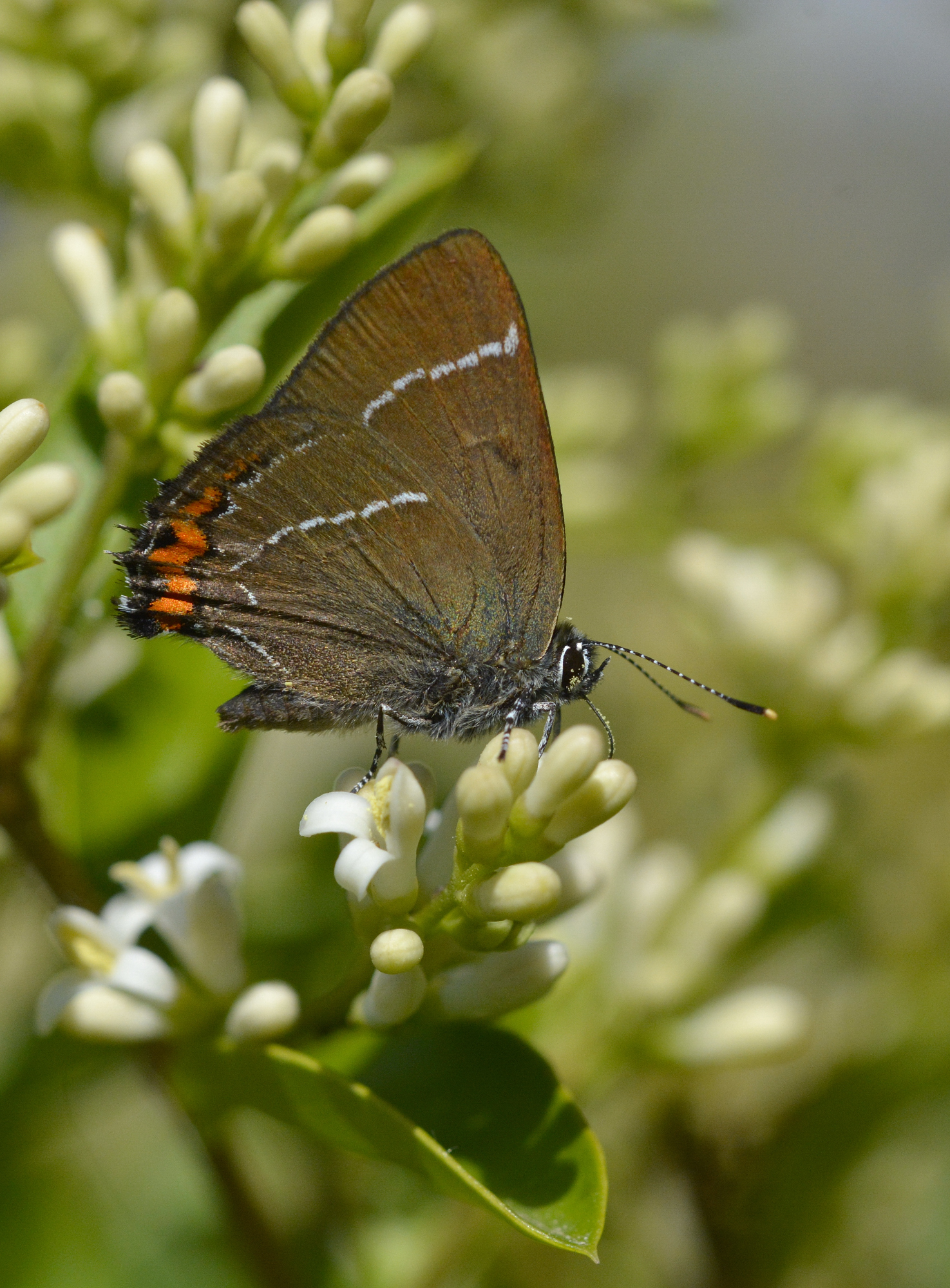
This is possibly the first White Letter Hairstreak butterfly I have seen in the garden ? I know I have seen Green Hairstreaks but I'm sure this is a first. Although slightly worn you can distinguish the white letter "W" on the lower hindwing, and a lovely bright orange edging too.